Key Takeaways
- If you live and work in a US state, that state is usually the best state to form an LLC. Form elsewhere and you still register and pay tax at home, so you pay 2 states.
- If you live outside the US and have no US staff or office, Wyoming and New Mexico cost the least: $100 then $60 a year in Wyoming, $50 and no annual fee in New Mexico.
- Delaware’s LLC annual tax is now $400, up from $300 (HB 400, tax year 2026 on). Delaware earns it mainly if you will become a C corporation and raise venture capital.
- Tax follows activity, not the formation state. California counts an LLC as doing business there when a member works for it from California, wherever the LLC was formed.
- "Anonymous LLC" means off the public record, not hidden. Your registered agent, the IRS and every bank still know who owns the company.
- The state you pick doesn’t change your federal tax. A foreign-owned single-member LLC files Form 5472 in every state, and misses cost $25,000.
The best state to form an LLC: the short answer
The best state to form an LLC is usually the state where you live and run the business. If you have no US home and no US operations, Wyoming or New Mexico is usually the cheapest good choice. Delaware is worth its higher yearly tax mainly when the company will turn into a C corporation and raise money from venture investors.
That runs against most "best state" lists, which rank states by fees and privacy as if the formation state were the only one that counts. It isn’t. States tax and regulate the companies that do business inside them, wherever those companies were formed. A Californian who forms in Wyoming still owes California’s $800 annual tax, because California counts the LLC as doing business there the moment a member works for it from California (source). The Wyoming fees get added on top.
Pick by situation, not by ranking
| Your situation | Usually the best choice | Why |
|---|---|---|
| You live in a US state and work from there | Your home state | You would register and pay tax there anyway. A second state adds fees and a second registered agent. |
| You live outside the US, no US staff, office or inventory | Wyoming or New Mexico | Lowest state fees, no member names on the public filing, no state income tax on income earned outside the state. |
| You plan to raise venture capital | Delaware (usually as a C corporation) | Investors know Delaware law and its business court. Many can’t invest in an LLC at all. |
| Several founders in different states or countries | Delaware or Wyoming | A neutral, well-known statute. Each founder’s home state may still tax their share. |
| You want the lowest yearly bill and nothing else | New Mexico | No annual report and no annual state fee. |
LLC cost by state: Delaware vs Wyoming vs New Mexico
Here are the state fees, taken from each state’s own fee schedule or statute. They don’t include a registered agent, which every state requires and a non-resident has to hire. Agents set their own prices, so compare what the yearly fee covers.
| State fee | Delaware | Wyoming | New Mexico |
|---|---|---|---|
| Form the LLC | $110 (source) | $100, plus 2.4% for a card online (source) | $50 (source) |
| Yearly state charge | $400 annual tax (source) | $60 minimum license tax (source) | None (source) |
| When it’s due | June 1, for the year before | 1st day of your formation anniversary month | Not applicable |
| Yearly report | None for LLCs | Annual report, filed with the tax | None |
| Late | $200 penalty plus 1.5% interest a month | Dissolved if 60 days late | Not applicable |
| State income tax on out-of-state income | No | No state income tax at all | No |
| Register an LLC from another state | $200 (source) | $150 (source) | $100 (source) |
What the first 3 years cost in state fees
Formation plus 3 yearly payments, before any registered agent fee:
- New Mexico: $50. There is nothing to pay after formation.
- Wyoming: $280 ($100 + 3 × $60), if the company holds under $300,000 of assets in Wyoming. Above that the tax is $0.0002 per dollar of those assets.
- Delaware: $1,310 ($110 + 3 × $400).
The gap narrows once you add a registered agent, because you pay one in all 3 states. It widens if your home state also charges you, which is the next section.
Delaware’s LLC tax went up to $400 in 2026
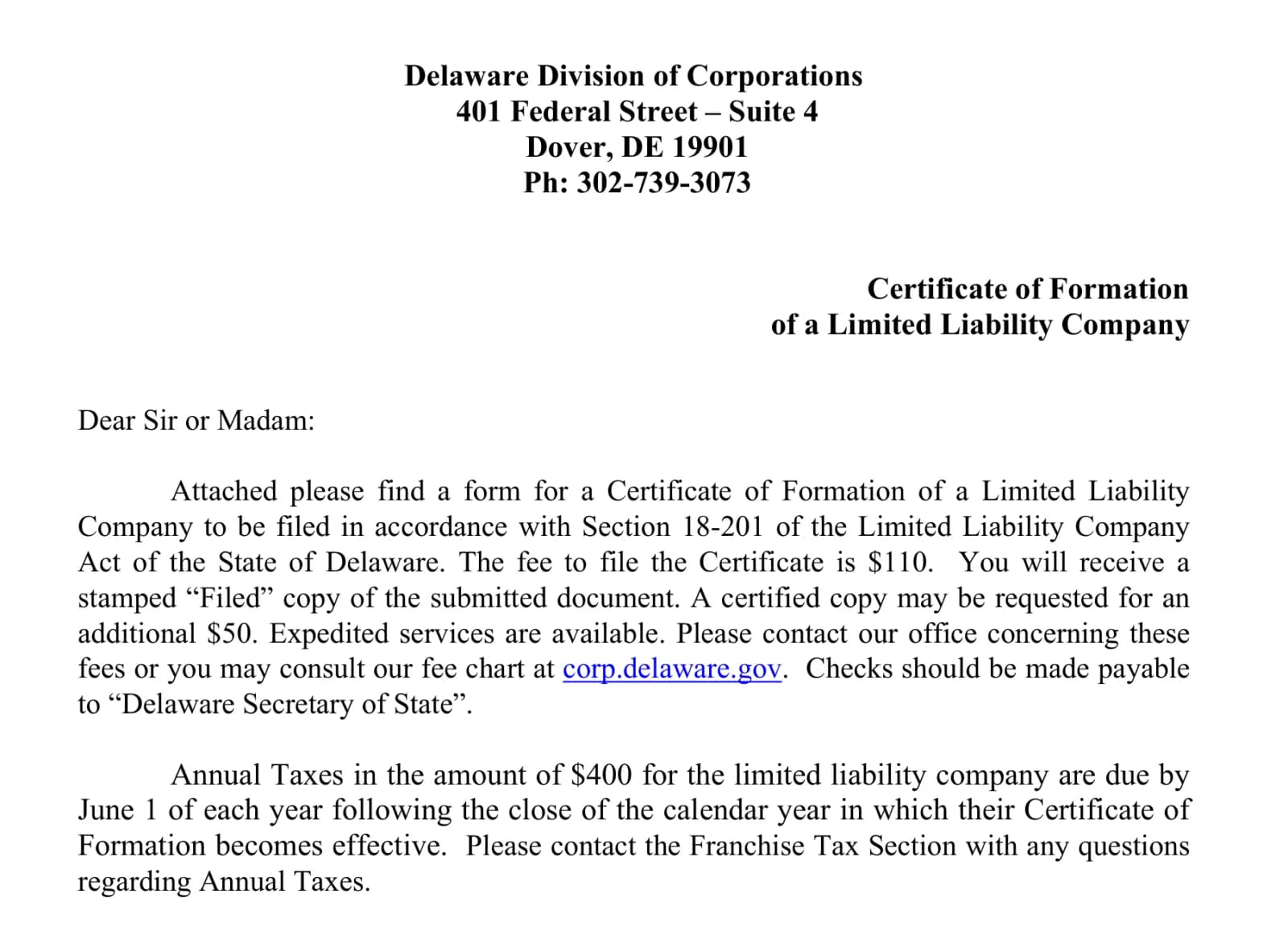
Delaware’s House Bill 400 was signed on May 21, 2026. It raised the flat annual tax on LLCs, LPs and general partnerships from $300 to $400, effective January 1, 2026 (source). It was the first increase since 2014. Delaware’s own formation form now says the $400 is due "by June 1 of each year following the close of the calendar year in which their Certificate of Formation becomes effective" (source). In practice, the first $400 bills arrive for June 1, 2027. Any article still quoting $300 is out of date.
Why your home state usually wins: doing business and nexus
Every state lets a company formed elsewhere operate inside it, on one condition: it registers as a "foreign" LLC, appoints a local registered agent and pays that state’s fees and taxes. Lawyers call the connection that triggers this "nexus". States call it "doing business" or "transacting business". Once you have it, you pay 2 states instead of 1.
California: the $800 tax follows the founder
California’s Franchise Tax Board says an LLC is doing business in California "if any of the LLC’s members, managers, or other agents performs activities in California on behalf of the LLC, regardless of where the LLC otherwise conducts business" (source). It is also doing business there if it is "commercially domiciled" in California, meaning it is run from there, or if its California sales pass $757,070 (the 2025 threshold) (source). Every LLC doing business in California pays the $800 annual tax, plus a fee starting at $900 once California income reaches $250,000 (source).
So a California designer who forms a Wyoming LLC pays Wyoming’s $100 and $60 a year, California’s $800 a year, a California registration, and 2 registered agents. Forming in California would have cost the $800 and 1 agent.
Texas and New York: registration costs more than formation
- Texas charges $300 to form an LLC and $750 to register one formed elsewhere. If a foreign LLC does business in Texas for more than 90 days without registering, the late fee equals the registration fee for each year it went unregistered (source). Texas franchise tax applies either way. For 2026 nothing is due below $2.65 million of revenue, but the report is still due May 15 (source).
- New York charges $200 to file articles and then requires a notice in 2 newspapers for 6 weeks within 120 days, followed by a $50 certificate of publication. Skip it and the LLC’s authority to do business is suspended (source). Forming in another state doesn’t get a New York business out of doing business in New York.
What usually doesn’t count as doing business
States publish lists of activities that don’t, on their own, count as doing business. Delaware’s list for foreign LLCs is typical (source):
- Holding member or manager meetings.
- Keeping bank accounts.
- Selling through independent contractors.
- Taking orders that are accepted outside the state.
- An isolated transaction that isn’t one of a series.
- Interstate commerce.
Having an office, staff, inventory or a founder working there is a different matter. Each state writes its own list, and income tax nexus follows separate, often broader tests like California’s. Check your state’s rules, or ask a CPA, before you assume a remote setup keeps you out.
Delaware LLC: when the $400 a year is worth it
Delaware’s pull is its law and its court, not its fees. More than 2.28 million entities are formed there, including over two-thirds of the Fortune 500 and nearly 70% of 2025 US IPOs. Delaware’s Court of Chancery is, in the state’s words, "a unique, centuries-old business court that has written most of the modern U.S. corporation case law" (source).
The venture capital case is for a C corporation
Stripe Atlas, which forms Delaware companies, says a C corporation is "preferred by institutional investors who might be unable to invest in LLCs", while an LLC is "common for founders who don’t plan to raise venture capital" (source). If you expect to raise from VCs, the usual path is a Delaware C corporation from day 1, or a Delaware LLC converted before the round. If you don’t, the Delaware brand does little for a small LLC.
What a Delaware LLC files and pays
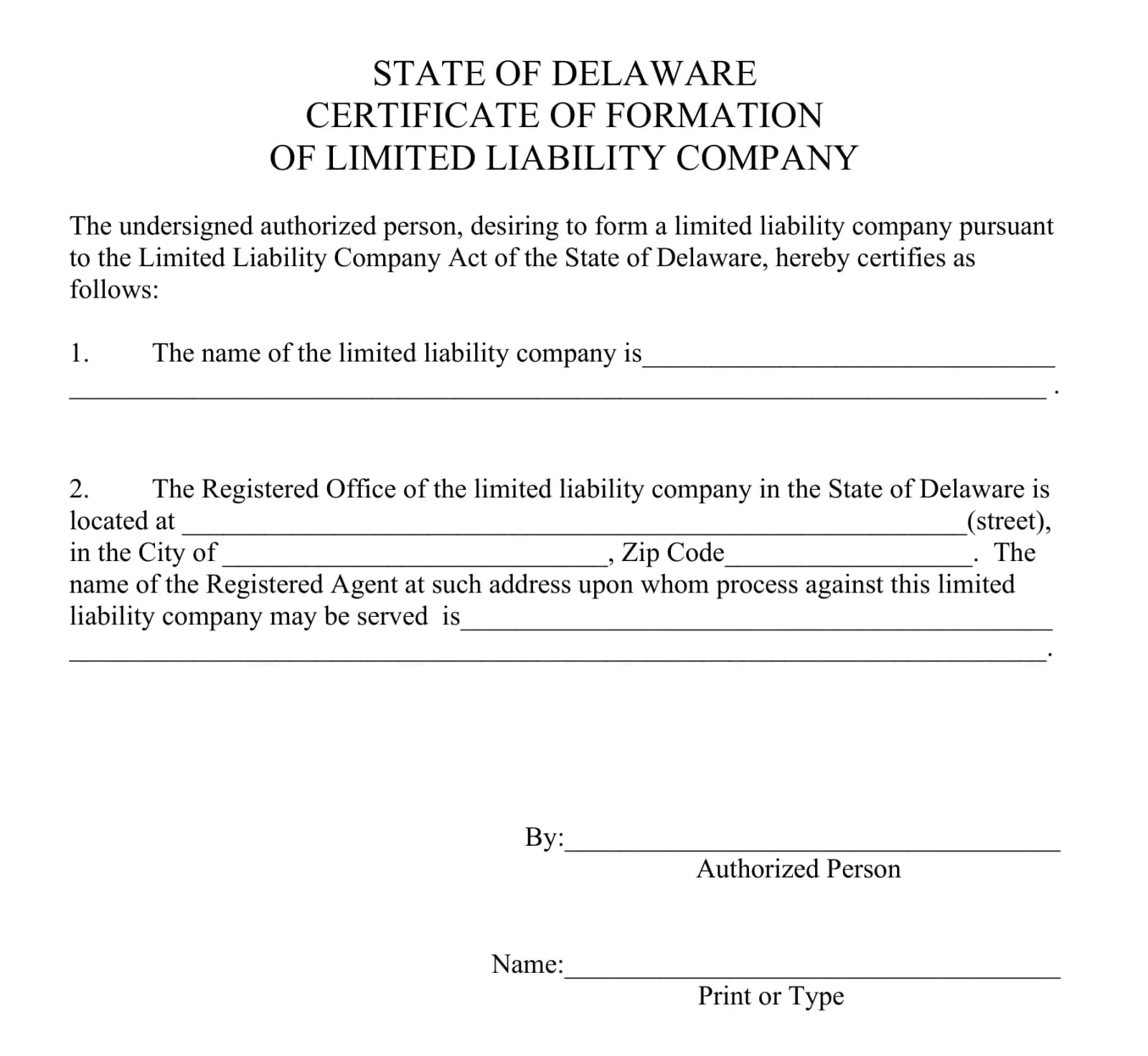
- A certificate of formation with just 3 things: the LLC’s name, its Delaware registered office and agent, and anything else the members choose to add (source).
- The $400 annual tax every June 1. There’s no annual report for LLCs. Late payment costs $200 plus 1.5% interest a month (source).
- A Delaware registered agent. The registered office "may but need not be a place of its business" (source).
- Optional speed: $50 for 24-hour filing, $100 same day, $500 in 2 hours or $1,000 in 1 hour (source).
Delaware doesn’t add an income tax just for being formed there. The Division of Revenue treats an LLC doing business in Delaware the same way the IRS does, so by default its income passes through to the members (source). An LLC with no Delaware activity pays the $400 and that’s the Delaware bill.
Best State to Form an LLC
Unlock the Full Guide & Checklist
Enter your business email to read the rest of this breakdown, download the PDF edition, and receive official compliance updates.
Wyoming LLC: low fees, no income tax, strong charging order
Wyoming is the default for many online businesses because it is cheap and simple. Filing costs $100. The yearly license tax is $60 or $0.0002 per dollar of assets located in Wyoming, whichever is higher. Wyoming has no corporate or personal income tax (source).
The Wyoming annual report deadline
The annual report and tax are due on the first day of the month you formed in, every year. The company is delinquent from the 2nd day of the following month. If the report is still missing 60 days after the due date, Wyoming administratively dissolves the LLC (source). Put the date in your calendar the day you form.
What the Wyoming form asks for
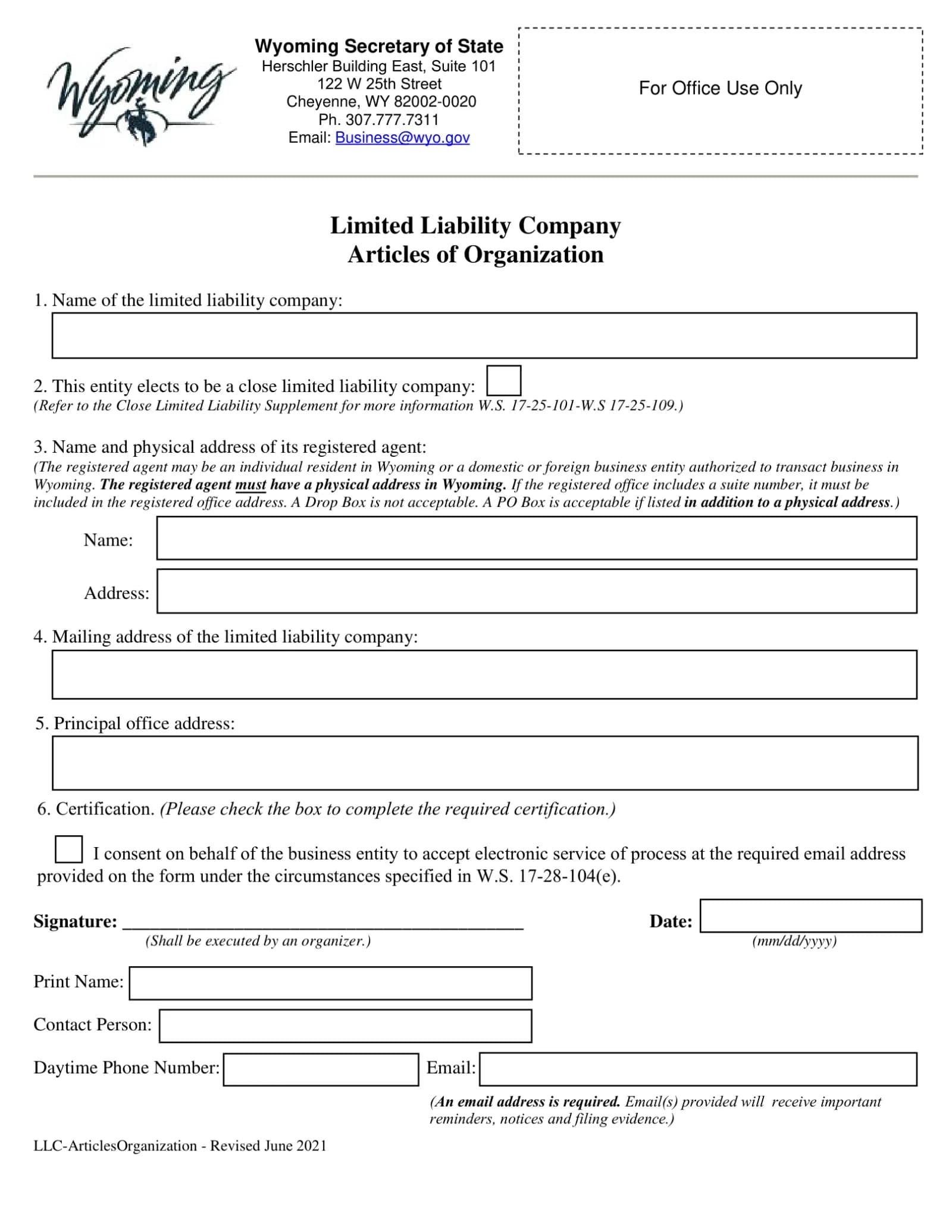
The law requires only the LLC’s name and its registered office and agent (source). The Secretary of State’s form also asks for a mailing address, a principal office address, the organizer’s printed name and a contact email. There’s no field for members (source).
Registered agent rules are strict
A Wyoming registered agent needs a street address in Wyoming where the agent, or someone working for the agent, "is physically present" to accept legal papers. An individual agent must live in Wyoming (source). A founder abroad can’t act as their own agent, so plan on a commercial one. Paper filings take up to 15 business days, and Wyoming doesn’t offer expedited filing (source). The same form says you can also file online at wyobiz.wyo.gov.
Charging order protection, including single-member LLCs
If a member is sued personally, a charging order lets the creditor collect the member’s distributions but not seize the LLC or its assets. Wyoming makes the charging order the "exclusive remedy", "including any judgment debtor who may be the sole member" (source). That covers single-member LLCs in so many words. Delaware’s statute also makes the charging order the exclusive remedy (source). This is asset protection, not privacy, and it does nothing about the LLC’s own debts.
New Mexico LLC: no annual report, but not tax-free
New Mexico has the lowest running cost of any state here. Forming costs $50, and the state’s LLC fee statute has no annual report or annual fee at all (source). The articles need the LLC’s name, its registered office and agent, and a few optional statements. Member and manager names aren’t required (source).
The catch: New Mexico has an income tax
Many guides call New Mexico tax-free for non-residents. It isn’t. New Mexico taxes "every nonresident employed or engaged in business in, into or from this state or deriving any income from any property or employment within this state", and says non-residents "including foreign nationals" must file when they have New Mexico income (source). Pass-through entities doing business in New Mexico file a state return and withhold tax from each non-resident owner’s share (source). An LLC taxed as a corporation pays New Mexico corporate income tax on New Mexico income, plus a $50 franchise tax (source).
If your New Mexico LLC earns nothing from New Mexico, none of this costs you anything. If you plan to sell to or work with New Mexico customers, budget for it. A multi-member New Mexico LLC should also ask a CPA whether it has a state filing to make, because the tax department’s wording covers entities "registered to do business in the state".
Who New Mexico suits
- Holding companies and small online businesses with no New Mexico customers or staff.
- Founders who want no yearly state filing to miss.
- Not a fit for a business that will operate in New Mexico, or one that needs a well-known statute to show investors.
Best state for an LLC if you live outside the US
If you live abroad and your US company has no US office, staff or inventory, the home-state problem mostly disappears. You have no US state to be doing business in, so the formation state is the only one you pay. That is why Wyoming and New Mexico come up so often for non-US founders, with Delaware for those raising venture money.
The state doesn’t change your federal filings
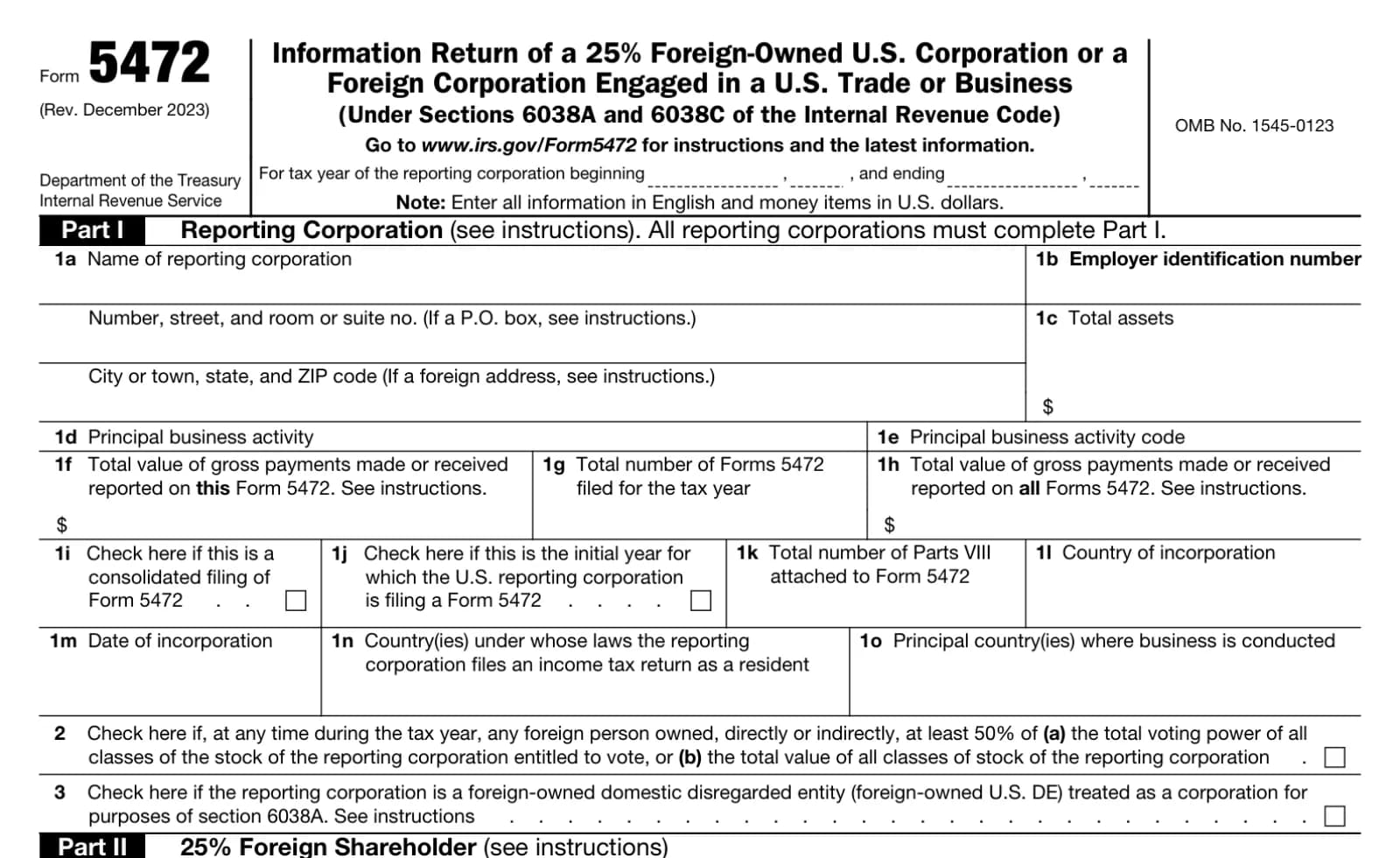
Federal rules are the same whichever state you pick. A US LLC with a single foreign owner is a "foreign-owned U.S. disregarded entity" to the IRS. It files a pro forma Form 1120 with Form 5472 every year, even with no income. The penalty for not filing is $25,000, plus another $25,000 if it continues 90 days after an IRS notice (source). You also need an EIN, and getting one without an SSN is its own process: see our EIN guide for non-US founders.
One burden did go away. FinCEN now says "U.S. companies are exempt" from beneficial ownership (BOI) reporting. Only companies formed outside the US that register to do business in a state still report (source). Our BOI reporting guide has the details.
Banks and payment platforms look at your address, not your state
A Wyoming or New Mexico LLC can open the same US bank and payment accounts as a Delaware one. What trips non-US founders up is the business address. Banks and processors ask where the company actually operates, and many reject registered agent addresses and mailboxes on that field. See our guides to Mercury’s address rules and Stripe verification. Each platform sets its own rules, so check theirs before you apply.
Anonymous LLC states: what actually stays private
Delaware, Wyoming and New Mexico all let you form without putting members’ names on the public filing. That is what "anonymous LLC" means in practice. It isn’t secrecy.
| Who knows the owners | Delaware | Wyoming | New Mexico |
|---|---|---|---|
| Public formation filing | No members or managers required | No members. Mailing and principal office addresses are asked for | No members or managers required |
| Registered agent | Knows its client | Must hold a named contact person, and the managers’ names and addresses, on demand | Knows its client |
| IRS | EIN application, and Form 5472 if foreign-owned | Same | Same |
| Banks and payment platforms | Full owner KYC | Full owner KYC | Full owner KYC |
The Wyoming row comes from its registered agent law. Every entity must give its agent the name, address and phone number of a natural person who is an officer, member or manager, as a "communications contact". The agent must keep the names and addresses of the managers or officers "in a format that can be reasonably produced on demand" (source).
The address you give the state is often the bigger privacy leak. If you list your home as the mailing or principal office address, it becomes part of the public record. A virtual mailbox keeps a home address off those forms. It is a mailing address, though, not an office, and it doesn’t change where the company does business.
Registered agent, mailing address and business address
Formation forms and bank applications ask for addresses that sound alike but do different jobs. Mixing them up is the most common reason a new LLC’s bank or platform application stalls.
| Address | What it’s for | Where it must be |
|---|---|---|
| Registered agent address | Receiving lawsuits and official state notices | A physical street address in the formation state where someone can accept legal papers |
| Mailing address | Everyday mail from the state, the IRS, banks and customers | Anywhere that reliably gets mail to you. A mailbox is fine for this |
| Business (principal office) address | Where the company actually operates. Banks and platforms verify it | A real place of business. Many banks and platforms reject registered agent addresses and mailboxes here |
A virtual mailbox from Virtual Mail Hub is a mailing address at a commercial mail receiving agency (CMRA): your mail is received, scanned and forwarded. It works as the mailing address on state forms and for IRS letters. It isn’t a physical business address for bank or platform verification. Our CMRA address guide explains why. When a bank or platform asks for a physical business address, the Office plan gives the company a real office in a staffed building, a signed 12-month lease and a utility account in its name.
How to choose your LLC state: a 7-question checklist
Answer these in order. The first "yes" usually decides it.
- 1Will you raise venture capital or give equity to employees? Look at a Delaware C corporation, not an LLC.
- 2Do you, a co-founder or an employee live and work in a US state? Form there, or budget for registering there too.
- 3Will you have an office, warehouse or inventory in a specific state? That state will likely want registration and tax.
- 4Do you live outside the US with no US operations? Compare Wyoming and New Mexico, then add the registered agent fee.
- 5Do you want no yearly state filing at all? New Mexico. Keep an eye on New Mexico income tax if you earn there.
- 6Do you want a well-known statute and business court? Delaware, at $400 a year.
- 7Do you want strong charging order protection for a single-member LLC? Wyoming’s statute says so explicitly.
Before you file
Need help forming? Registate forms in any state. Once the company exists, a Virtual Mail Hub mailbox handles its mail and the Office plan gives it a real office.
Frequently asked questions
What is the best state to form an LLC?
Usually the state where you live and run the business, because you would have to register and pay tax there anyway. If you live outside the US with no US operations, Wyoming or New Mexico costs the least. Delaware is worth its $400 yearly tax mainly for companies that will raise venture capital.
Is Wyoming or Delaware better for an LLC?
Wyoming, for most small LLCs: $100 to form and a $60 minimum yearly tax, against Delaware’s $110 and $400 a year. Delaware is better when investors expect Delaware law, which usually means converting to a C corporation.
What is the cheapest state to form an LLC?
New Mexico has the lowest state fees: $50 to form and no annual report or annual fee. You still pay a registered agent each year, and New Mexico taxes any income you earn in New Mexico.
How much is the Delaware LLC annual tax in 2026?
$400, up from $300 under HB 400, starting with the 2026 tax year. It is due by June 1 of the following year, so the first $400 payment for most LLCs is due June 1, 2027. Late payment adds a $200 penalty and 1.5% interest a month.
Can I form an LLC in another state than where I live?
Yes, any state lets you form there. But if you do business in your home state, you must also register there as a foreign LLC and pay its fees and taxes. That’s why forming out of state often costs more for someone living in the US.
Do I need to register my LLC in my home state?
If the LLC does business there, yes. That usually includes working from there, having staff or an office there, or passing the state’s sales thresholds. California, for example, counts an LLC as doing business when any member performs activities for it in California.
What is the best state to form an LLC as a non-resident?
Most non-US founders with no US operations choose Wyoming or New Mexico for their low fees, or Delaware if they plan to raise venture capital. Federal filings are the same in every state: a foreign-owned single-member LLC files Form 5472 every year.
Which states allow anonymous LLCs?
Delaware, Wyoming and New Mexico don’t require member names on the formation filing. That keeps owners off the public record only. The registered agent, the IRS and every bank still know who owns the company.
Does New Mexico have state income tax for LLCs?
Yes, on New Mexico income. A pass-through LLC doing business in New Mexico files a state return and withholds tax for non-resident owners, and New Mexico taxes non-residents on New Mexico-source income. An LLC with no New Mexico income owes no New Mexico income tax.
What happens if I miss my Wyoming annual report?
The LLC becomes delinquent the day after the due date. If the report and tax still aren’t filed 60 days after the due date, Wyoming administratively dissolves the company, and you have to apply for reinstatement.
Can I use a virtual address as my LLC’s address?
As a mailing address, yes. A virtual mailbox is a commercial mail receiving agency (CMRA) address. It can’t be your registered agent address, and many banks and platforms reject it as the physical business address, so check each one’s rules.
Does the state I form in affect my federal taxes?
No. The IRS treats an LLC the same whichever state it was formed in. Federal tax depends on the number of owners, any tax election, and where the income is earned.