Key Takeaways
- Mercury collects 3 addresses. The legal address must be a US physical address and can’t be a PO box. The physical address is where you work and can be your home, in the US or abroad. The mailing address is only for cards.
- Mercury doesn’t accept a PO box, virtual address, commercial mail receiving agency (CMRA), mail center, or registered agent address as your physical address.
- When Mercury asks for proof of address, it lists 8 document types, including a signed lease, a utility bill, or a non-Mercury bank statement from the last 90 days.
- You don’t need to be a US citizen or resident. Your company must be formed in the US, have existing or planned US operations, and its founders must not live in one of the roughly 50 countries and regions Mercury can’t serve.
- You need a state-filed formation document, an IRS EIN document (CP 575, 147C, or the returned SS-4), and ID for every 25% owner. Mercury usually decides within 0 to 2 business days.
- Mercury is a fintech, not a bank. Deposits sit with Choice Financial Group and Column N.A., Members FDIC.
Mercury bank address requirements at a glance
The Mercury bank address requirements come down to one idea: Mercury wants to know where your company is registered and where your team really works. It asks for 3 addresses and treats each one differently (source). Most rejected or stalled applications mix them up, usually by putting a registered agent or virtual mailbox address in the field that asks where you work.
| Address field | What it is | What Mercury accepts | What Mercury rejects |
|---|---|---|---|
| Company legal address | The address on your formation documents. It is also your card billing address and appears on bank documents. | A physical address in the US, such as the one on your formation documents or an office | PO boxes, virtual offices, and workspaces |
| Company physical address | Where you and your team work day to day | A verifiable residential address if you have no office yet, or a verifiable international address | PO boxes, virtual addresses, CMRAs, mail centers, registered agent addresses |
| Company mailing address | Where Mercury sends physical cards | A physical address with no special characters that USPS can deliver to | PO boxes |
Why Mercury cares: US banks have to collect an address for every customer. For a company, federal rules ask for "a principal place of business, local office, or other physical location" (31 CFR 1020.220). Mercury isn’t a bank itself, but its partner banks are, so its application follows the same logic.
Looking for Mercury’s own address?
Mercury has no branches. To receive a wire, use the Wire Details PDF in your dashboard (Accounts, then your account, then Documents, then Wire Details). It lists the exact bank name and address your sender needs for domestic and international wires (source). Don’t copy a bank address from a blog: it depends on which partner bank holds your account. Mercury publishes its address for legal service on its legal process page, and support runs through in-app chat or [email protected] (source).
Your Mercury legal address: the US address on your formation documents
Your legal address is "the address from your formation documents and the billing address for your cards that appears on your bank documents." It "must be a physical address in the United States" (source). Mercury says it "cannot accept P.O. Box addresses or virtual offices/workspaces as a company’s legal address", and that it is "unable to make exceptions to this policy" (source).
Can the legal address be your registered agent?
Often it is, because many founders list their registered agent on their formation documents. Mercury’s address guide for accountants says the legal address "might be your HQ or your registered agent, but cannot be a P.O. Box, PMB, or virtual office" (source). Expect a follow-up, though. Mercury says it may ask you to verify your physical address when the legal address "is a P.O. box, virtual address, mail center, or registered agent" (source). A registered agent address can sit in the legal field. It can never be your physical address.
Why the legal address matters after approval
- Account access: if Mercury doesn’t have a valid legal address on file, "access to your Mercury account may be temporarily restricted" (source).
- Wires: a wire can fail when the legal address is a PO box. You resend it after the address is fixed (source).
- Cards: the legal address is the billing address for your Mercury cards, so online checkouts see it (source).
How to change your Mercury legal address
- 1Click your company name in the top left of the dashboard, then Settings to open your Company Profile.
- 2Under Company legal address, choose Edit. If you changed the address in the past 90 days, you’ll see Contact Support to Update instead.
- 3Have updated formation documents, or an equivalent state filing, ready. Mercury sends a secure upload link after you submit.
Only admins can change the address. The new one must still be a US physical location, not a PO box or virtual office (source). If you moved your registered agent or principal office, file the change with your state first, so the document you upload matches what you type.
Your Mercury physical address: where you actually work
The physical address is "where you and your team work day-to-day." Mercury accepts "a verifiable residential address (if your company doesn’t have an office yet)" and "verifiable international addresses (for overseas customers)." It doesn’t accept "a P.O. box, virtual address, commercial mail receiving agency, mail center, or registered agent address" (source).
This is the field founders get wrong most often. If you run your LLC from your apartment in Toronto or Istanbul, that apartment is your physical address. Mercury’s eligibility page says the same thing: your principal place of business can be in the US or abroad, and residential addresses are fine, but registered agent addresses, PO boxes, and UPS Store addresses are not (source).
Why a virtual mailbox address fails this field
A virtual mailbox is a commercial mail receiving agency, or CMRA. USPS defines a CMRA as "a business that, in whole or in part, accepts the delivery of U.S. Mail on behalf of another person or entity as a business service," and requires its addresses to carry "PMB" or "#" (USPS DMM 508.1.8). It receives mail. It isn’t where you work, so Mercury rejects it here by name. Writing "Suite" in place of the PMB number doesn’t change what the address is. Our CMRA address guide explains how banks and platforms tell the difference.
The mailing address
Mercury uses the mailing address to send physical cards. Statements are digital and "are not mailed to any address." The mailing address must be physical, have no special characters, and be deliverable by USPS (source). Mercury checks deliverability with Lob, an address tool tied to USPS data. Each address line has to be shorter than 35 characters and use Latin characters only (source).
Mercury bank address proof: the documents Mercury accepts
Mercury "may also request documentation to verify your address." The document "must clearly show the company name, or the beneficial owner’s name, along with the full physical address (including unit numbers if applicable)." Accepted documents include, but aren’t limited to (source):
- A valid government ID, such as a driver’s license or resident card
- A valid, signed lease agreement
- A utility bill or mortgage statement from the last 90 days
- A bank account, credit card, or other financial statement from the last 90 days, not from Mercury
- Proof of occupancy at a coworking space, such as a signed lease or an invoice
- A subscription invoice from the last 90 days
- Tax documents from the most recent year
- A pay stub from the most recent pay period
Mercury Address Requirements
Unlock the Full Guide & Checklist
Enter your business email to read the rest of this breakdown, download the PDF edition, and receive official compliance updates.
Mercury bank account requirements and documents
Mercury supports most US-registered companies, "including those founded by people living outside the U.S." Your company "must be formed and registered in the United States or a U.S. territory" (source). A company formed abroad can’t apply (source).
Information you enter
- Your business’s legal name
- Your industry and a description of what the business does
- The physical address where you operate, commercial or residential
- Your company’s source of funds
- Details about your current or planned US operations
- Owner details and business documents
Documents you upload
| Document | What Mercury accepts |
|---|---|
| Formation document | A state-filed Articles of Organization, Articles of Incorporation, or Certificate of Formation |
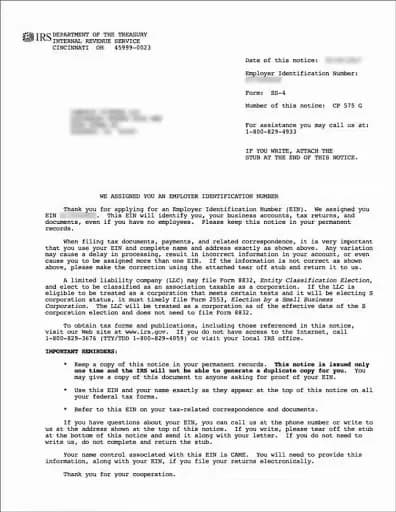
| EIN document | IRS Form CP 575, Letter 147C, or the SS-4 as returned by the IRS (not just your application) |
| ID for each 25% owner and one control person | Must show photo, date of birth, issue and expiry dates, and ID number. A passport for international applicants; a driver’s license, state ID, passport, or passport card for US citizens; a green card or employment authorization card for permanent residents |
Sources: Gathering your documents, Company structures Mercury supports. If your EIN just arrived, Mercury says a screenshot of the IRS online EIN confirmation "may be acceptable on a temporary basis" (source).
Who counts as a beneficial owner
Mercury lists every person who owns 25% or more, directly or through another company, and 1 person who manages the business, such as the CEO. If a holding company owns your LLC, you trace ownership up to the individuals (source). That mirrors the federal beneficial ownership rule for banks (31 CFR 1010.230). Everyone listed must be 18 or older.
Businesses and structures Mercury can’t take
- Money services businesses and crypto exchanges
- Adult entertainment, cannabis, and internet gambling
- Trusts and sole proprietorships. A sole proprietorship has no state formation document to verify (source).
Single-member and multi-member LLCs, C corporations, S corporations, partnerships, and non-profits are all supported. The LLC is "the most common structure among Mercury customers" (source). Still choosing a state? Our LLC state comparison covers the trade-offs, and Registate handles formation for non-US founders.
How to open a Mercury bank account, step by step
Mercury bank account opening is online and takes one application. It has 6 steps, and you can leave and pick up where you stopped (source). The base plan is $0 a month (source).
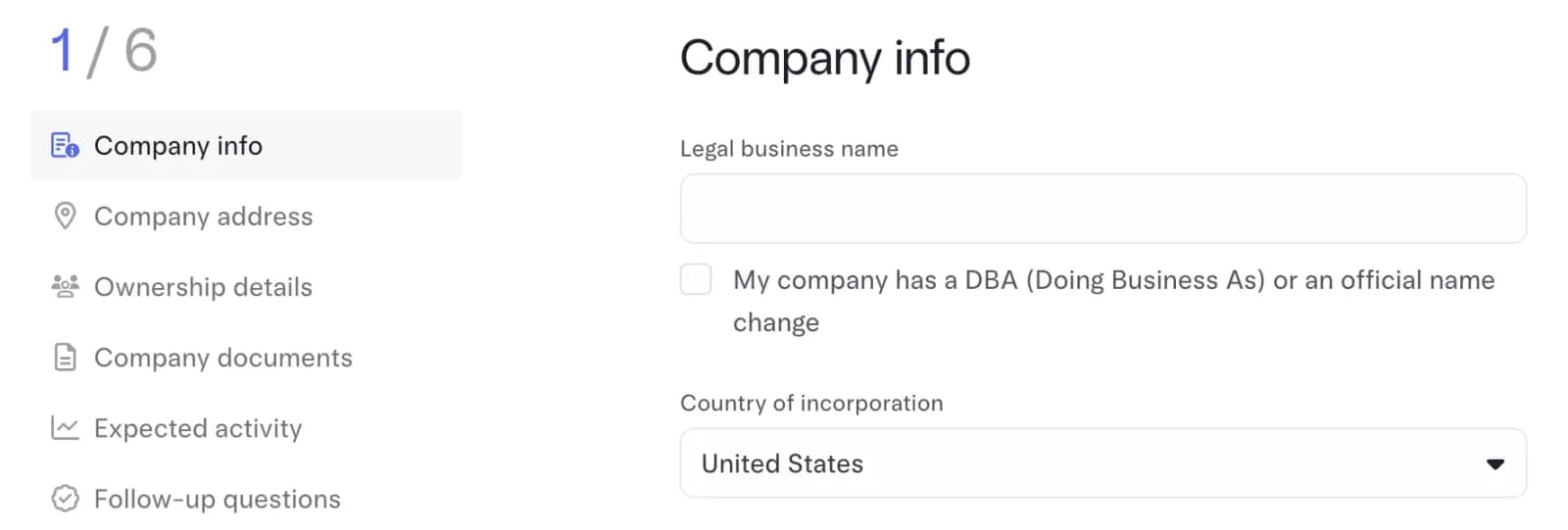
- 1Company info. Enter the legal business name exactly as it appears on your formation document and EIN letter. Tick the DBA box only if you have a filed DBA or name change.
- 2Company address. Put the address from your formation documents in the legal field. Put where you actually work, home or office, US or abroad, in the physical field.
- 3Ownership details. Add every 25% owner and 1 control person. Each needs an ID that shows their photo, date of birth, and issue and expiry dates.
- 4Company documents. Upload the formation document and the CP 575, 147C, or returned SS-4.
- 5Expected activity. Describe what you sell, who pays you, your source of funds, and your US operations. Be concrete: name the platforms and the customer countries.
- 6Follow-up questions. Answer anything specific to your industry. Then submit.
How long Mercury approval takes
Mercury usually decides "within 0–2 business days." Your status shows "In Review" once the application is in. If Mercury needs more, it emails you, so check spam. If 7 business days pass with no word, look for a request you missed (source). You can optionally speed things up by linking an outside bank account through Plaid. While you wait, you can set up cards, invite your team, and turn on 2-factor authentication, which every Mercury account needs.
Mercury for non-US residents and international founders
Mercury is a US business bank account for non-residents that you apply for fully online. "You do not need to be a U.S. citizen or resident to apply." The business must be formed in the US, have "existing or planned operations in the U.S.", and have a principal place of business in the US or abroad (source). You apply with your passport. No SSN or ITIN is on Mercury’s document list (source).
Mercury restricted countries
Mercury can’t open accounts for founders living in about 50 countries and regions. The rule follows where you live, not your passport: a citizen of a listed country who lives elsewhere "may still be eligible, pending application review" (source). As of the list updated 2026-09-18, it includes:
- Sanctioned: Cuba, Iran, North Korea, and the Russian-occupied regions of Ukraine.
- Asia: Afghanistan, Bangladesh, Bhutan, Cambodia, Indonesia, Kyrgyzstan, Maldives, Myanmar, Nepal, Pakistan, Philippines, Uzbekistan, and Vietnam.
- Europe: Albania, Belarus, Bosnia and Herzegovina, Croatia, Latvia, Russia, and Ukraine.
- Middle East: Iraq, Lebanon, Palestine, Syria, and Yemen.
- Africa: Angola, Burkina Faso, Burundi, Cameroon, Central African Republic, both Congos, Eritrea, Gambia, Lesotho, Liberia, Libya, Mali, Mozambique, Nigeria, Somalia, South Sudan, Sudan, and Zimbabwe.
- Americas and Pacific: Haiti, Nicaragua, Venezuela, and Vanuatu.
India, the UK, Canada, Australia, the UAE, and Turkey are not on the list today. That means you can apply, not that you will be approved. The list does change: in 2024 Mercury told customers in several countries, including Nigeria, that their accounts would close by August 22, 2024 (TechCabal). Check the live list before you apply.
Cards if you live abroad
Card rules are separate. Mercury can’t mail physical cards to some countries it otherwise serves, including India, China, Morocco, and Sri Lanka, and has paused shipments to several Gulf states including the UAE. Virtual cards still work there (source).
Getting the EIN without an SSN
You can’t use the IRS online EIN tool without an SSN or ITIN, or if your principal place of business is outside the US (IRS). File Form SS-4 by fax instead: from outside the US, fax 304-707-9471 and the EIN usually comes back within 4 business days. You can also call 267-941-1099, 6 a.m. to 11 p.m. Eastern, Monday to Friday (IRS SS-4 instructions). Mercury needs the returned SS-4 or the CP 575, not your own copy of the application. Our EIN guide for non-US founders walks through the form.
Proving US operations to Mercury
This is the check most non-US founders don’t see coming. If your business has no US workplace, no owner living in the US, and no owner with a US-issued ID, Mercury "may request additional verification during your application or via email after your account is approved" (source). The emails carry "[Action Required]" in the subject.
Any one of these can serve as proof, and it must match deposit or payment activity in your Mercury account:
- A record of a sale to a US customer (a screenshot works)
- An invoice or contract with a US customer, partner, or supplier
- A signed SAFE or investment agreement
- Employment documents or payroll records for a US-based employee
- A signed lease or rental agreement for a physical office or coworking space in the US
- A utility bill from the last 90 days
- Your business’s most recent federal tax return
For most online sellers and service businesses, the easiest proof is commercial: a US customer invoice or a marketplace payout that lands in the Mercury account. A US office lease is one option on the list, not a requirement.
Mercury application denied, restricted, or closed
Mercury doesn’t explain individual decisions. It "cannot disclose specifics as to why a particular application was approved or rejected," and says decisions depend on its eligibility requirements (source). Its partner-program page adds that denials are "often due to missing or incorrect documentation" (source).
Address problems that match Mercury’s own rules
- A registered agent, virtual mailbox, UPS Store, or other CMRA address entered as the physical address
- A PO box anywhere in the legal or physical fields
- A legal address that doesn’t match the formation documents, with no amendment to back the change
- A proof of address older than 90 days, or one that doesn’t show the unit number
- A founder living in a country on Mercury’s restricted list
How to reapply
If you have information you didn’t provide the first time, you can reapply. Log into the denied application, click your initials, open Settings, click your organization’s name, and choose Apply for a new account (source). Fix the specific field first. Resubmitting the same file rarely changes the outcome.
If Mercury closes or locks your account
Two address-related triggers appear in Mercury’s help center: no valid legal address on file, which can restrict access, and missing proof of US operations, which can lead to a lock or closure (source, source). If an account is closed with money in it, Mercury sends the balance by check to the shipping or legal address on file (source), which is one more reason to keep that address current.
What bank does Mercury use?
Mercury is "a fintech company, not an FDIC insured bank." Its banking services are provided through Choice Financial Group and Column N.A., Members FDIC (source). Mercury also works with Patriot Bank, N.A., which issues its IO credit card (source). It worked with Evolve Bank & Trust in the past, but announced in March 2025 that it was moving customers away from Evolve (source). Older guides that name Evolve are out of date.
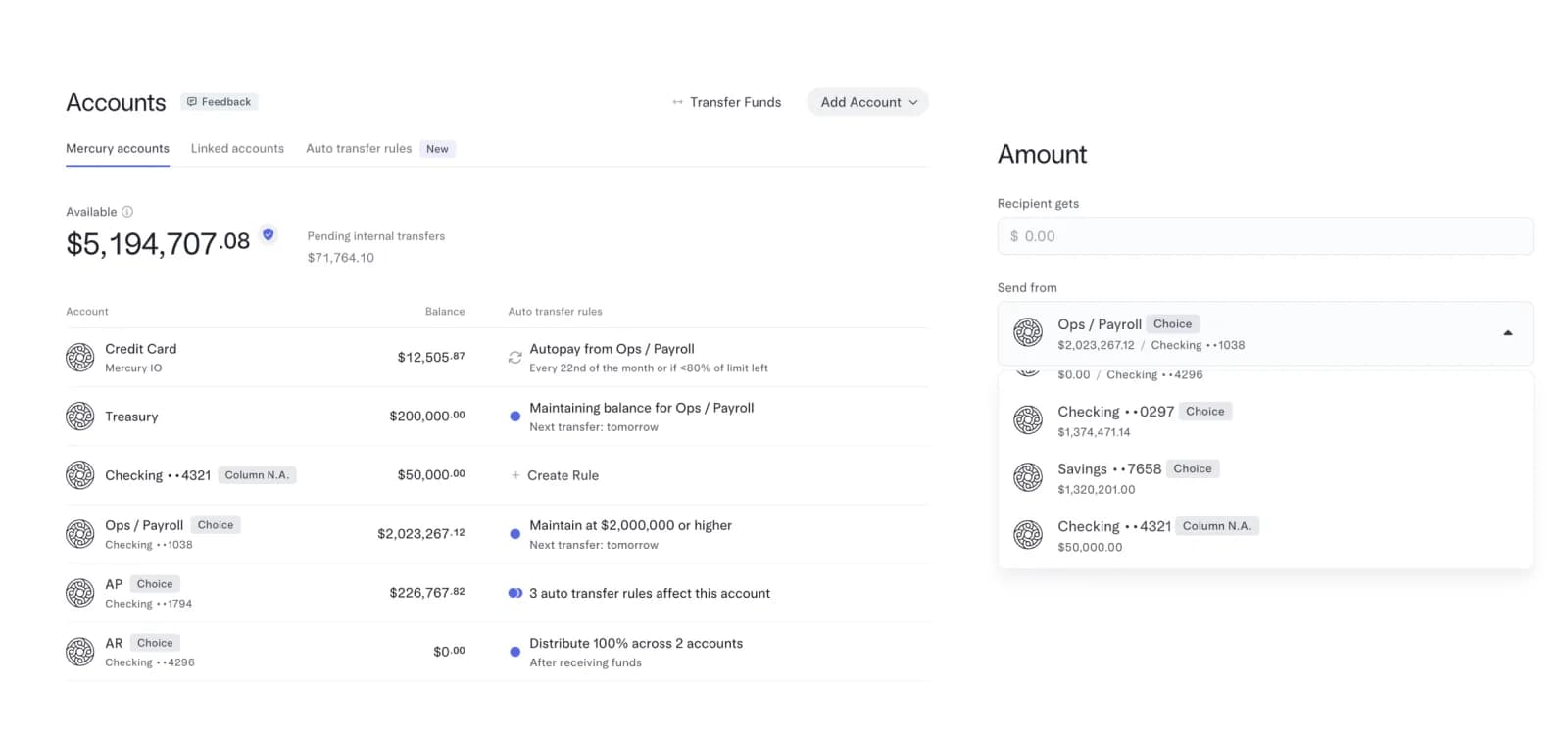
Your account’s details page names its partner bank, and features differ slightly between them. Real-time payments work only on Column accounts, for example (source). Deposits are eligible for up to $5M in FDIC insurance through the partner banks’ sweep networks, and certain conditions apply (source). FDIC records list Choice Financial Group’s main office in Fargo, North Dakota, and Column’s in Salt Lake City, Utah (FDIC BankFind).
Is Mercury getting a bank charter?
It is on the way, not finished. On April 24, 2026 the OCC granted "preliminary conditional approval" for Mercury Bank, National Association, based in Salt Lake City. Final approval to open comes only after all preopening requirements are met, including FDIC deposit insurance (OCC Corporate Decision #1372). Until then, the partner-bank setup above applies.
Where a Virtual Mail Hub address fits in a Mercury application
Mercury is specific about address types, so it helps to be just as specific about what each Virtual Mail Hub address is.
- A VMH mailbox is a CMRA address with a PMB number. Mercury doesn’t accept a CMRA as your physical address or as proof of a US office, so don’t enter one there. A mailbox is still useful for what it is for: receiving the IRS CP 575, state notices, and bank letters at a US address, and scanning them to you abroad.
- The VMH Office plan is a real office in a staffed building, with a signed 12-month lease and a utility account in your company’s name. It is designed to meet physical-address requirements. A signed office lease and a recent utility bill both appear on Mercury’s lists of accepted documents (source, source). Mercury makes its own decision on every application, and each platform sets its own rules, so check theirs.
You may not need either. If you work from home abroad, Mercury accepts that home as your physical address, and a US customer invoice can prove US operations. A US office makes sense when your business really needs a US base: US staff, a place to meet clients, or a lender or platform that asks for a US operating address. See the Office plan or compare plans.
Opening Relay or Wise as well? Their address rules differ from Mercury’s; see our Relay and Wise guide. For Stripe’s address checks, see the Stripe verification playbook.
Frequently asked questions
What address do I use for Mercury?
Use the US address on your formation documents as the legal address, and the place you actually work, home or office, in the US or abroad, as the physical address. Mercury rejects PO boxes, virtual addresses, CMRAs, and registered agent addresses in the physical field.
Can I use a registered agent address for Mercury?
Only as the legal address, and only because it’s on your formation documents. Mercury may then ask you to verify your physical address, and it never accepts a registered agent address as the physical address or principal place of business.
Does Mercury accept a virtual address?
No. Mercury lists virtual addresses, commercial mail receiving agencies, and mail centers as unacceptable physical addresses, and virtual offices as unacceptable legal addresses.
Can I use my home address for Mercury?
Yes. Mercury accepts a verifiable residential address as the physical address if you don’t have an office yet, including a home outside the US.
What documents do I need to open a Mercury bank account?
A state-filed formation document, an IRS EIN document (CP 575, 147C, or the SS-4 returned by the IRS), and a photo ID for every owner with 25% or more plus one person who manages the business. Mercury may also ask for proof of address.
Can non-US residents open a Mercury account?
Yes, if the company is formed in the US, has existing or planned US operations, and its founders don’t live in a country on Mercury’s restricted list. You apply with a passport; no SSN or ITIN is required.
Which countries does Mercury not support?
About 50 countries and regions, including Pakistan, Nigeria, Bangladesh, Vietnam, the Philippines, Indonesia, Ukraine, and Russia, plus sanctioned places such as Iran and Cuba. The rule follows where you live, not your citizenship. Check Mercury’s live list before applying.
Can I open a Mercury account from India, Canada, the UK, or Australia?
You can apply: none of these countries is on Mercury’s restricted list as of September 2026. Approval still depends on the full review, and Mercury can’t mail physical cards to India, so you’d use virtual cards there.
How long does Mercury take to approve an account?
Usually 0 to 2 business days. If Mercury needs more information it emails you. If 7 business days pass with no answer, check your inbox and spam for a request.
Why was my Mercury application denied?
Mercury doesn’t share the reason. The common causes it points to are missing or incorrect documents and eligibility rules, such as an unsupported industry, a restricted country of residence, or an address type it doesn’t accept. You can reapply with new information.
What bank does Mercury use?
Choice Financial Group and Column N.A., both Members FDIC. Mercury is a fintech, not a bank, and received only preliminary conditional OCC approval for its own national bank charter in April 2026.
Is Mercury bank FDIC insured?
Mercury itself isn’t a bank, but deposits held at its partner banks are FDIC insured and eligible for up to $5M in coverage through sweep networks, subject to pass-through conditions. Mercury Treasury is not FDIC insured.
Where is Mercury bank located?
Mercury has no branches; it works online. Mercury Technologies lists a San Francisco address for legal service, and its proposed national bank would be based in Salt Lake City. For wires, use the bank details in your account’s Wire Details PDF.