
DECISION 01
What do you actually need?
Review the envelope and request a scan before deciding to ship the original. Read letters online while traveling, then coordinate delivery only for the paper copies you need.

Give senders one US mailing address while your route changes. Virtual Mail Hub lets you review incoming mail online and arrange selected forwarding to a confirmed stop where you can receive it.
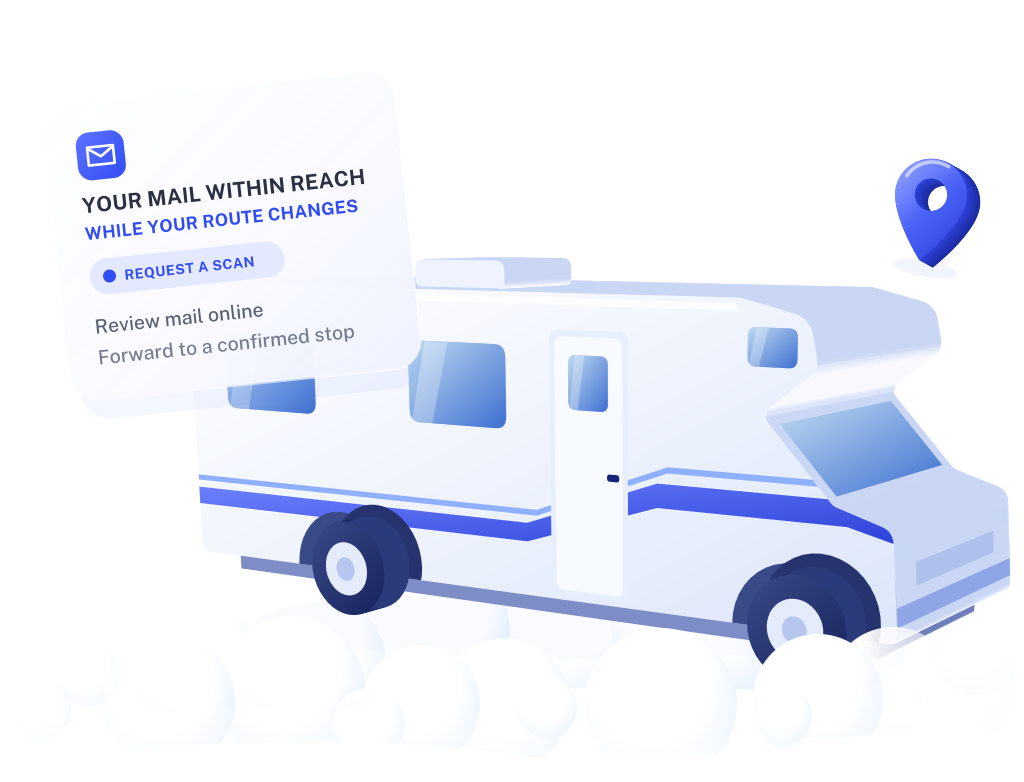
Give participating senders your active VMH address for correspondence, whether you travel full time or take shorter RV trips. Plan mail decisions around your route and confirmed receiving stops.
Read requested scans online as you travel. When you need paper in hand, choose a stop with permission and time to receive it. Check storage terms when keeping an original for a later stop.
Review the envelope and request a scan before deciding to ship the original. Read letters online while traveling, then coordinate delivery only for the paper copies you need.
Choose a confirmed receiving stop along your route. Ask the campground, host or other location whether it accepts the chosen carrier and the type of item you are expecting.

Allow for processing, carrier transit and possible delays. Arrange selected originals around a confirmed stay with enough time to receive them before your next departure.

Review your plan’s scan, handling, postage and storage terms. Forwarding depends on the item, destination and available delivery service.
See the next-stop shipping checklistActivate your mailbox and complete the required identity and mail-authorization steps before sharing the assigned address. Update important senders directly.
Check envelope images and request scans for letters you want to read. Decide separately which originals you need at your next confirmed stop.
Check the exact name, address, carrier policy and arrival window. Ask a host or campground about receiving fees and how long it holds items.
Review VMH’s storage period, handling charges and forwarding postage. Allow for processing, transit and delays before you leave the receiving destination.
Check shipment status before changing plans. A new destination for future forwarding does not automatically redirect an item already on its way.
Two illustrative ways to handle mail around an RV itinerary.
For example, a routine letter arrives while you are moving between short campground stays. Request a scan to read it online. If the contents are all you need, you can make your next decision without arranging a delivery along the route.

For example, you need a paper document during a longer campground stay. Confirm the receiving name, carrier and item policy first, then discuss forwarding with VMH around that stay’s arrival window.

If your route changes after dispatch, carrier options may be limited. Review shipment status and contact support rather than assuming the parcel will follow an updated destination automatically. Check storage periods and fees before leaving originals at VMH for a later stop.
Compare personal mailbox plansDiscuss the destination with VMH after confirming the campground’s receiving policy. Acceptance is specific to the location; a reservation alone is not confirmation that it will receive mail for you.
Request an open-and-scan to review the contents online. Decide separately whether you need the original document. If you do, arrange forwarding to a confirmed receiving destination, subject to the applicable terms.
The service described here manages mail. It is not a residency, tax-status or domicile service. If domicile, vehicle registration or voting eligibility is part of your decision, check those requirements separately before choosing an address.
Contact the carrier and receiving location about available options. Future forwarding instructions do not automatically redirect a shipment already on the way.
Check the permitted storage period and fees before leaving items at VMH. Arrange handling decisions around the internet access you expect to have.
Last reviewed
Most keep one mailing address that does not move and have mail sent on from there to wherever they are staying. That address can be a relative’s home, a post office option or a mail service such as a virtual mailbox. With VMH, senders use your mailbox address, you see envelope images online, and you decide what to scan, keep or forward.
USPS General Delivery lets some post offices hold mail for a limited time for a person without a local address. Not every post office offers it, so ask that office before you give the address to anyone. A campground or host is an option only when it confirms it receives mail for guests. See how the mailbox works.
You can apply, and the step to plan for is USPS Form 1583. USPS requires that form and two current IDs from everyone who receives mail through a mailbox provider: one with your photo and one that shows your address. The home address you write on the form has to match that address document.
The VMH mailbox address cannot be used as the home address on the form. If the address on your documents is one you no longer stay at, ask VMH before you apply so you know what the form needs. Each adult traveling with you who wants mail in their own name completes a separate form. How Form 1583 works.
As often as you have a confirmed place to receive it, and no more often than your mail needs. Each forward is a new shipment with its own postage, so one approach is to let letters wait at VMH, read the important ones as scans, and forward the originals together when you reach a stop you are sure of.
A longer stay is usually the better target, because it leaves room for processing, carrier transit and delays. If something urgent arrives, you can decide about that one item instead of changing your whole routine. Check the storage terms for anything you leave waiting. Compare mailbox plans.
Keep one correspondence address while you travel and choose a delivery destination when your next stop is confirmed.
Explore mailbox plans