





You can summarize the following content using these AI tools:

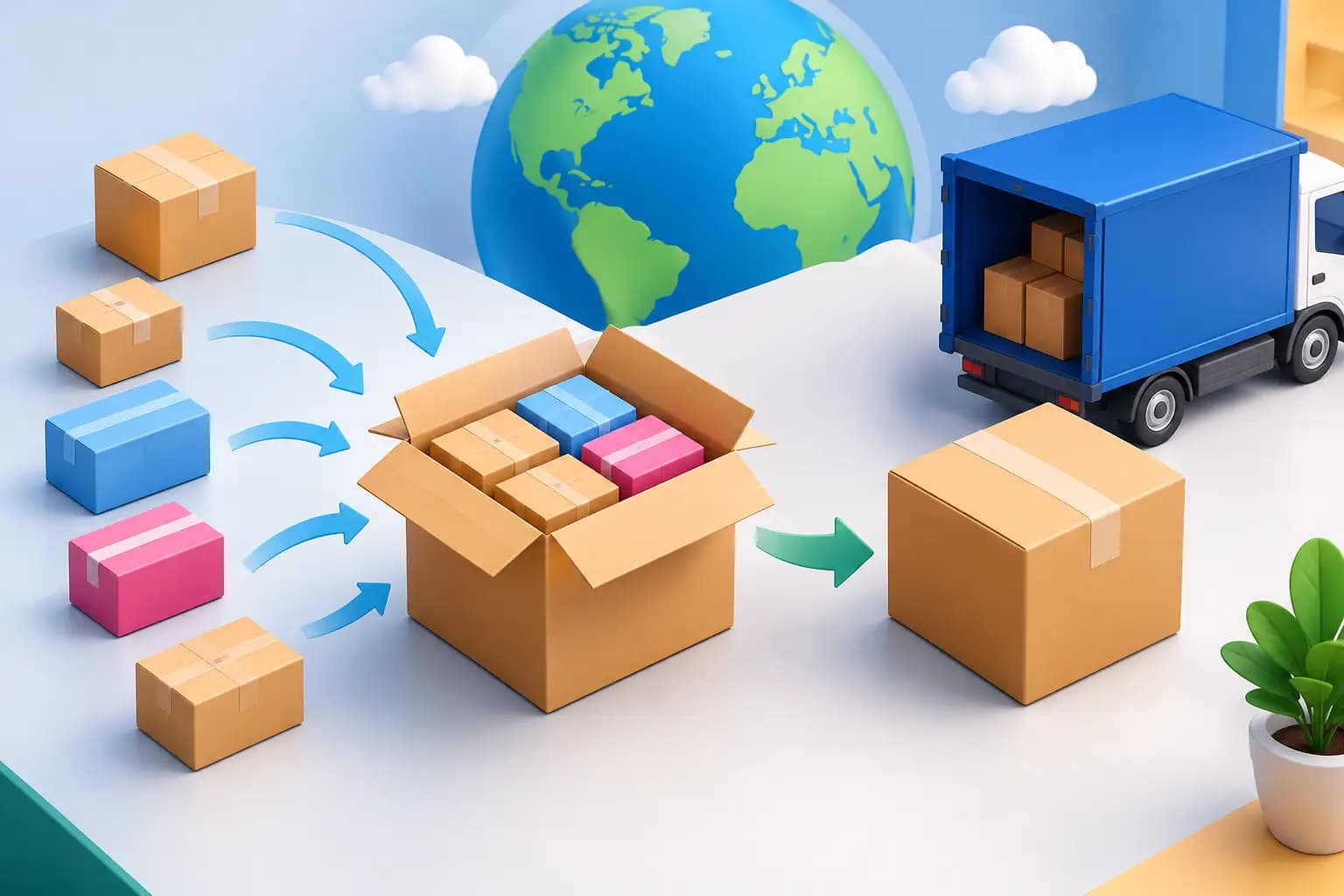
A package consolidation shipping service solves a costly problem for remote founders, online sellers, and global teams: several packages arriving separately at a U.S. address, each requiring its own forwarding shipment. Instead of paying to send every box as it arrives, you can hold eligible deliveries, combine them into one shipment, and manage the outcome from a secure dashboard.
For a business that operates across borders, this is not simply about saving on postage. It is about controlling inventory samples, office supplies, product returns, and essential equipment without tying someone to a physical office. Your mail and packages arrive at a legitimate U.S. commercial address. You receive visibility, make a forwarding decision when you are ready, and keep your operations moving wherever you are based.
What a package consolidation shipping service does
Package consolidation begins when multiple shipments arrive for the same customer. Rather than forwarding each package in its original box, the mail center holds the items until you request shipment. The packages can then be placed together in a single outbound carton when size, contents, and carrier rules allow.
The difference can be meaningful. A laptop accessory, a set of product samples, and business materials sent separately may each carry their own carrier minimums, packaging, and international processing fees. Combined into one properly sized shipment, they typically require one label, one pickup process, and less duplicate packaging.
For founders outside the United States, consolidation also creates a better receiving workflow. You can wait for all expected deliveries, review arrival notifications, and choose a shipping method based on urgency and destination. That prevents the frustration of paying for an expensive international forward when a second package was due to arrive the next day.
Why consolidation matters for remote businesses
Shipping costs are rarely just the number shown at checkout. International forwarding can be affected by package dimensions, carrier service level, destination, insurance, customs requirements, and dimensional weight. Sending three small boxes separately can cost more than expected, especially when each box contains empty space.
Consolidation reduces avoidable duplication. It can lower packaging volume and may reduce the total cost of forwarding, particularly for lightweight items that arrived in oversized retail packaging. It also gives your business one clearer shipment record instead of several tracking numbers, invoices, and delivery windows.
There is an operational benefit, too. A founder managing a U.S. business from abroad may need bank mail, government notices, vendor samples, and replacement equipment handled differently. Sensitive letters may need scanning or secure forwarding right away, while non-urgent packages can wait for consolidation. A virtual mailbox separates those decisions instead of forcing one shipping rule for everything that arrives.
How package consolidation works in practice
The process should be simple, but it should never be casual. Packages need to be received, associated with the correct account, stored securely, and released only under your instructions. A well-run service gives you visibility at every point.
1\. Receive packages at your commercial address
Use your assigned U.S. street address for eligible business and personal deliveries. When an item arrives, it is logged and you receive an arrival notification. This gives you a record before any forwarding decision is made.
A real commercial street address is especially useful for businesses that need more than a place to receive boxes. Depending on your plan, formal address documentation such as a signed commercial lease and utility bill can support business formation, bank account applications, and verification workflows. Package handling becomes part of a broader premium U.S. business identity.
2\. Review arrivals and wait for the right shipments
From your secure dashboard, you can see which packages have arrived and decide whether to forward them immediately or hold them for other expected deliveries. Timing matters. If an important contract device must reach a team member this week, it should not wait for lower-priority shipments. If product samples are expected over several days, holding them may be the more economical choice.
This is where a package consolidation shipping service gives you control rather than a fixed mailroom routine. You choose the shipment timing based on your actual business need.
3\. Request consolidation and forwarding
Once the relevant packages are available, request consolidation and select a forwarding destination. The provider prepares the shipment according to applicable carrier requirements, using an appropriate box and protective materials. You can then select from available shipping options based on speed, price, tracking, and destination.
For international deliveries, accurate item descriptions and declared values matter. Customs documentation is not paperwork to treat as an afterthought. Clear, truthful information helps avoid delays, disputes, and unexpected issues at the border.
4\. Track one outbound shipment
After processing, you receive shipment details for the consolidated package. One tracking record is easier to share with a colleague, bookkeeper, customer, or overseas team member than several disconnected deliveries. It also creates a cleaner operations trail when you need to reconcile expenses or confirm that time-sensitive materials have been sent.
When consolidation saves money and when it may not
Consolidation is often valuable, but it is not automatically the best choice for every delivery. The strongest savings usually appear when several packages are headed to the same destination and can fit efficiently into one carton. It is particularly helpful when retailers use oversized boxes or when you are forwarding multiple non-urgent items internationally.
The trade-off is timing. Holding a package for consolidation can delay its departure, which may not be acceptable for replacement equipment, launch-critical samples, or items with a firm delivery deadline. A larger combined box can also trigger dimensional-weight pricing. In some cases, two compact shipments may be less expensive or more practical than one oversized carton.
Certain content can limit your options. Lithium batteries, liquids, perishables, regulated products, and restricted items may have special carrier rules or may not be eligible for all shipping methods and destinations. Packages from different sellers may also arrive with separate documentation that needs careful handling. The right decision depends on what you are shipping, where it is going, and how quickly it needs to arrive.
Build a smarter package workflow
The best results come from treating physical deliveries as a managed workflow, not a surprise at the front desk. Send shipments to one established address, turn on notifications, and plan around expected arrivals. If you buy inventory samples, equipment, or supplies regularly, group purchases by delivery window so you have a realistic opportunity to consolidate.
Keep urgent and non-urgent items separate from the start. Urgent packages should have a forwarding instruction as soon as they arrive. Non-urgent deliveries can remain on hold until the rest of the order reaches your account. This approach gives your team faster decisions without creating unnecessary outbound shipments.
For businesses receiving both mail and packages, assign simple internal rules. For example, government correspondence can be scanned or forwarded immediately, while vendor materials can wait for weekly review. Virtual Mail Hub makes this practical by bringing mail actions, package handling, and forwarding requests into one secure dashboard, helping place routine mail management on autopilot.
Frequently Asked Questions
What is package consolidation?
Package consolidation is the process of combining multiple eligible packages addressed to the same customer into one outbound shipment. It can reduce duplicate packaging, simplify tracking, and potentially lower forwarding costs.
How long should I wait before consolidating packages?
Wait until all expected, non-urgent packages have arrived, but do not hold time-sensitive items just to create a larger shipment. Your ideal holding period depends on delivery schedules, storage terms, and the urgency of the contents.
Can I consolidate packages for international shipping?
Yes, eligible packages can often be consolidated for international forwarding. The shipment must still comply with carrier rules, destination-country restrictions, customs declarations, and any limitations on regulated goods.
Does consolidation always reduce shipping costs?
No. Consolidation often helps, but a larger box can incur dimensional-weight charges. Compare the expected shipment size, destination, and delivery speed before choosing between one consolidated shipment and separate forwards.
Can business mail and packages be handled differently?
Yes. You can create different instructions for different needs. Important letters may require scanning or immediate forwarding, while packages, samples, and supplies can be held for a later consolidation request.
A well-managed address should give your business more than a place for deliveries to land. It should give you a clear next action for every item that arrives, whether that means scan, forward, store, consolidate, or securely destroy.

