




You can summarize the following content using these AI tools:

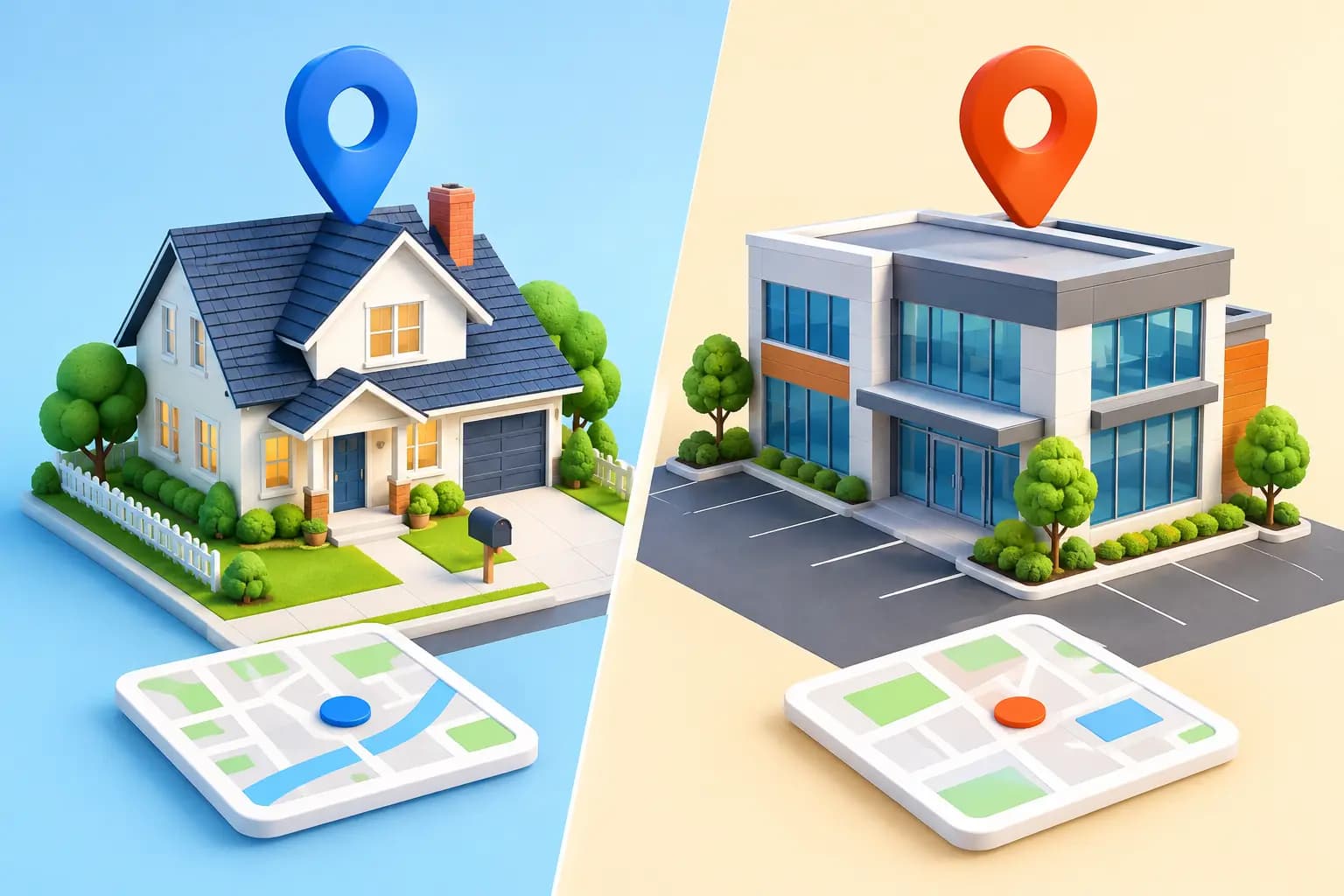
Your business address can appear on state filings, invoices, customer returns, bank records, marketplace accounts, and government notices. That makes the choice between a home address versus commercial address more than an administrative detail. It affects how private, credible, and mobile your business can be.
For a solo consultant working locally, a home address may be perfectly practical. For a remote founder, e-commerce seller, digital nomad, or international business owner building a U.S. presence, it can create friction quickly. The right answer depends on where you work, what documents you need, and how much separation you want between your personal life and your company.
Home Address Versus Commercial Address: The Core Difference
A home address is your personal residential location. You may use it to receive mail, identify your principal place of business, or form an LLC when your state and business situation allow it. It is familiar, immediate, and often has no added monthly cost.
A commercial address is a real street address associated with a business location rather than a private residence. It may be a traditional office, coworking space, or virtual business address supported by a commercial mail receiving operation. The key distinction is not simply the ZIP code. It is the business identity, mail infrastructure, and documentation behind the address.
For many founders, a commercial address creates a cleaner line between personal and business operations. Customers see a professional business location. Personal mail stays personal. Company correspondence is routed into a system designed for business continuity, even if the founder is traveling, working from home, or based overseas.
That distinction matters because an address is often doing several jobs at once. It may serve as a public-facing business address, a mailing address, a return address, and evidence of a business presence. Those uses do not always have identical requirements.
When a Home Address Makes Sense
Using your home address can be a reasonable choice when you operate a low-profile local business, do not mind the address being public, and do not need formal commercial proof-of-address documents. A new freelancer may prefer the simplicity of using the place where they actually work.
It can also be appropriate if a licensing board, insurer, or local zoning rule requires disclosure of the physical location where services are performed. A commercial mailing address does not change local licensing obligations, home-occupation rules, or tax responsibilities.
The trade-off is visibility. Depending on your state and entity type, the address on formation documents may become part of the public record. Clients can find it through a search, packages can arrive at your door, and business mail can mix with family correspondence. For a business that scales, that setup often becomes harder to manage than it first appears.
A home address can also look out of place in certain customer-facing contexts. This is especially true for online stores, agencies serving larger clients, businesses selling on marketplaces, and companies working to establish a premium U.S. business identity. Perception is not everything, but it can influence trust before a prospect ever speaks with you.
Why Founders Choose a Commercial Address
A commercial address gives a business its own operating identity. Instead of tying the company to wherever the owner sleeps, it provides a stable location for business mail and a more professional point of contact.
Privacy is usually the first benefit. If your company address appears on a website, invoice, return label, or state filing, you are not automatically publishing your residence. This is especially valuable for home-based founders, creators, consultants, and e-commerce operators handling frequent returns or customer inquiries.
Continuity is the second. Moving apartments, traveling for months, or relocating abroad should not mean losing sight of tax notices, bank letters, or time-sensitive government mail. With a properly managed commercial address, mail can be received, logged, and made visible through a secure dashboard. You decide whether to open and scan an item, forward it, shred it, consolidate packages, or handle a check deposit request.
The third advantage is documentation. Some business activities require more than a mailing location. Banks, payment providers, formation services, and compliance teams may request proof that the business maintains an address. A commercial-address provider that can supply a signed commercial lease and utility bill can be materially more useful than a standard P.O. box or a bare mail forwarding service.
That does not mean every institution will accept every document in every circumstance. Each bank, platform, state agency, and licensing authority sets its own rules. A strong commercial address gives you better documentation options, but you should always confirm the specific requirements before applying.
What a Commercial Address Can and Cannot Do
A commercial address can receive mail and packages, support a professional business image, and help create a consistent address strategy across your operations. For eligible business services, it may also provide the lease and utility-bill documentation requested for verification and compliance workflows.
It cannot automatically replace every address requirement. Your business may still need a registered agent in its formation state. A registered agent has a specific legal role: receiving service of process and official state correspondence during business hours. A business mailing address and registered-agent address can be the same in some arrangements, but they should never be assumed to be interchangeable.
Similarly, a commercial mailing address is not a workaround for local permits, sales-tax nexus, insurance disclosures, or regulations that require an actual operating location. If you run a food business from a home kitchen or provide licensed services at a physical site, use the address required by the relevant authority.
The practical approach is to map the purpose of each address before you select one. You may need a public business address for customers, a mailing address for incoming correspondence, a registered agent for legal notices, and a residential address for identity verification. Keeping those roles clear avoids costly corrections later.
Choosing the Right Address for Your Business Stage
For a side project with no public footprint, using a home address may be the fastest option. Just recognize that changing it later can require updates across formation records, bank accounts, tax registrations, marketplaces, payment processors, invoices, and websites.
For a growing remote business, a commercial address is often the more durable foundation. It allows you to establish a business presence without committing to a long office lease or being tied to one location. This is particularly useful for founders who travel, operate distributed teams, or need a legitimate U.S. address while living internationally.
For e-commerce businesses, look beyond mail scans. Ask how packages are handled, whether forwarding is available internationally, whether multiple packages can be consolidated, and whether customer returns can be managed without sending inventory or correspondence to your home.
For compliance-sensitive businesses, prioritize documentation and security. You want clear mail-receiving procedures, controlled access to scanned documents, reliable notifications, and a provider that understands USPS authorization requirements. A low-cost address that cannot support verification requests may create more work than it saves.
A Modern Way to Manage a Commercial Address
The value of a commercial address grows when it is paired with mail management on autopilot. Rather than waiting for someone to check a mailbox, you receive arrival notifications and control next steps from anywhere. A scanned envelope tells you what arrived; a requested scan gives you the information needed to act.
Virtual Mail Hub combines a real commercial street address with USPS-compliant mail handling, secure online controls, and business documentation designed for founders who need flexibility without losing visibility. Every letter can remain accessible wherever business takes you, while sensitive mail is handled through defined instructions instead of sitting unattended.
Before signing up, verify the address location, the documentation included with your plan, package policies, forwarding costs, scan and storage limits, and the process for authorizing mail receipt. Clear answers upfront make the address a dependable business asset rather than another account to maintain.
Frequently Asked Questions
Can I use my home address for my LLC?
Often, yes. Many states allow an LLC to list a home address as its principal office or business address. However, that address may become publicly visible, and it may not provide the commercial documentation a bank or verification team requests. Check your state rules and the requirements of any institution you plan to use.
Is a commercial address the same as a P.O. box?
No. A commercial address is a street address at a business location, while a P.O. box is a box at a post office. A commercial address can be more suitable for package delivery, professional branding, and business documentation. Acceptance still depends on the specific bank, agency, platform, or vendor reviewing your address.
Can a commercial address receive packages as well as mail?
It can when the provider offers package receiving. Confirm carrier acceptance, package size and storage limits, notification timing, forwarding options, and consolidation services before relying on an address for inventory, returns, or frequent deliveries.
Do I still need a registered agent if I have a commercial address?
Possibly. A registered agent is a separate legal requirement in most states and must be available to receive official legal documents during required business hours. Choose an address strategy that covers both legal compliance and day-to-day mail management, then let your business address support growth without putting your home life on display.